Strategy · September 12, 2026 · 4 minute read
Everything still waits on you, and you call it being needed

Sadia Anwer · September 12, 2026
Strategy
Everything still waits on you, and you call it being needed
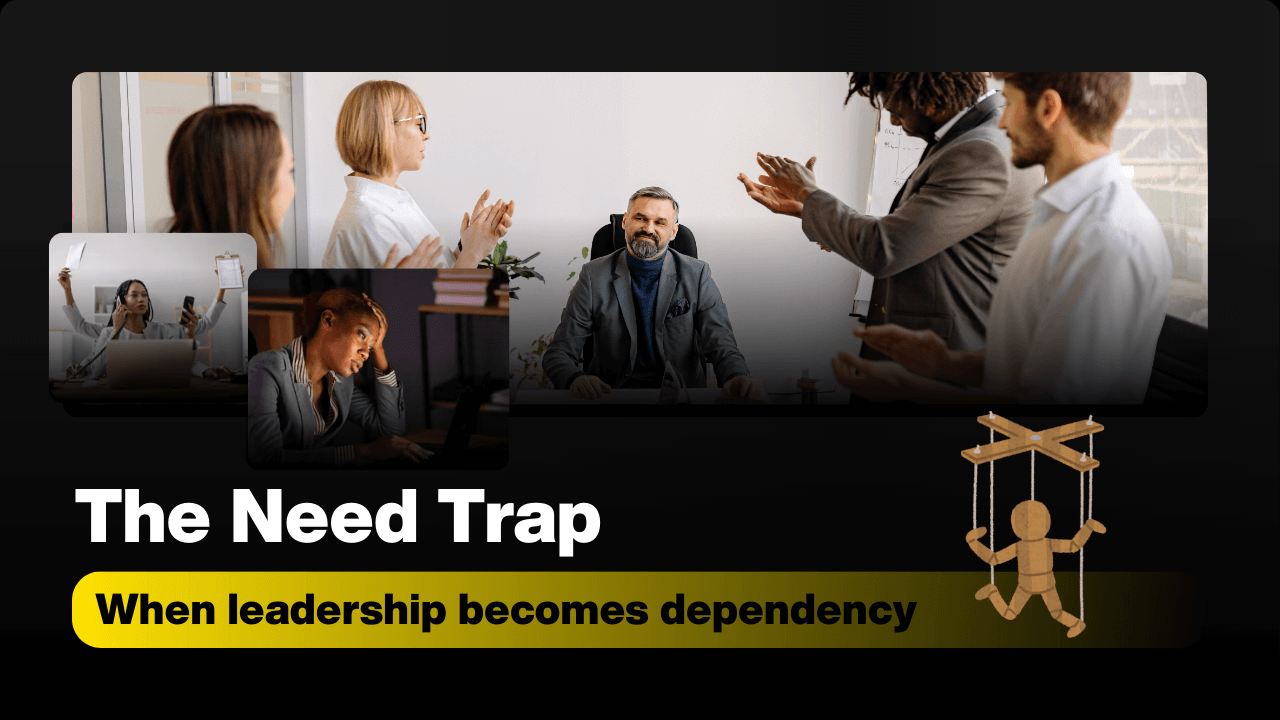
You did not decide to become the bottleneck. It happened because you were good at answering. Every message needs your reply. Every decision waits on you. Small problems find their way to your desk because that is where they have always been solved. People tell you the place would fall apart without you, and you half-believe them, because there is evidence: it nearly does, every time you take a week off. That feeling has a name, and it is not importance. It is dependence, and you designed it without meaning to. ## Being needed is not the same as being valuable Most owners get rewarded early for being in everything. You move fast, you fix it, you save the day. Do that for three years and it stops being a behaviour and becomes the job description. You are the person who knows everything, approves everything, and unblocks everything. The trap is that it is genuinely flattering. Nobody quits a role that makes them feel essential. So you tell yourself the business is not ready yet, that you will write it all down later, that this quarter is unusual. It is not unusual. The system has already been built around your constant presence, and every month you spend inside it makes the rebuild bigger. ## What it actually costs, in things you can count "I'm too involved" is an adjective and you can argue with it. These are not adjectives. Go and look at your own week before you read any further: - How many decisions in the last seven days came to you only because nobody had written down who owns them? - How many problems were repeats of a problem you already solved once, for someone else? - How many interruptions arrived on a Tuesday afternoon because your availability has no edges and everyone knows it? Count them. The number is the real state of the business, and it is usually worse than the feeling. Then look at the pattern: almost none of those required more effort from you. They required a decision to be written down once. ## The part nobody admits Here is the uncomfortable read on all of this, and it is worth saying before you find it yourself. Telling an owner to "let go" is easy advice to give and often bad advice to take. Some of what only you can do is real. You do hold context nobody else holds. Client relationships genuinely sit with you. If you step back from all of it at once because a blog post told you to, things will drop, and you will conclude the whole idea was wrong. The move is not disappearing. It is being deliberate about which things route to you because they should, and which route to you because that is the path of least resistance for everyone else. The second list is almost always longer than the first, and it is the only list worth touching. ## Control comes from clarity, not from presence The fear underneath the delay is a control fear. If you are not in the middle of it, you cannot be sure it is being done right. But presence is the weakest form of control there is. It only works while you are awake and looking. Clear ownership, a written process, and an expectation somebody agreed to keep working at 9pm on a Friday when you are at dinner. That is the trade: you swap the illusion of control for something that runs without your attention. And when you do step out of the middle, the thing that usually happens is that people step up. Not because they suddenly got better, but because for the first time the decision was actually theirs. ## What changes when you get the space back The difference is not free time. It is what you can see. Buried in every detail, you see problems one at a time, and you think in minutes. Out of it, you start seeing the pattern behind the problems, and you think in weeks. That is the whole job at your level, and it is the part that gets squeezed out first when everything routes through you. The business also stops being fragile. A company built around one person's constant attention has one point of failure, and it is the person reading this. ## If you only do one thing Take the count from earlier. Pick the single repeat problem that has come to you the most times this year. Write down who owns it and what they are allowed to decide without asking you. One page. Do it badly. Then watch whether it comes back to your desk. That is the test, and it takes a week to run. You do not have to disappear. You have to stop being the default answer to every question. --- *Sadia Anwer keeps the engine running at Insert Fuel. Systems, support, and the follow-up that would otherwise sit in someone's inbox until Monday.* If the count you did above was ugly and you want a second pair of eyes on which of those should route to you and which should not, [book a strategy call](/book).
Keep reading
Done Is Better Than Perfect: Scale Your Business Fast
Learn why prioritizing progress over perfection accelerates business growth and boosts productivity.
 Basim Mousilli· 3 minStrategy
Your business runs on things only you know
If you stopped answering for a month, what breaks first is never the work. It is the twenty decisions nobody else has ever seen you make.
· 4 minStrategyYou are not tired from the work. You are tired from re-deciding everything.
Switching CRMs three times in a year is not progress, it is leakage. Here is what re-deciding the same things every week actually costs you, and what to lock instead.
· 4 minWork out what to do first
The hardest part is knowing what to fix first.
You have just finished “Everything still waits on you, and you call it being needed”. When everything needs doing, most owners either freeze or fix the easiest thing rather than the most valuable one. Bring us your list. We will go through it with you and tell you which single change would make the biggest difference to your next ninety days, and you are welcome to go and do it yourself.
- You leave with a clear order of operations
- Weekly Coaching with Basim is open to every client
- No obligation and nothing to sign
Thirty minutes, free, and you will speak to Basim rather than a salesperson. If we are not the right fit we will say so and point you somewhere better. Not ready for a calendar? Leave us a sentence instead and we will ring you.
 Previous ArticleThe lead called at 9pm. Someone answered, and it sounded like you
 Next ArticleYou are not behind because you lack ability. Your business is in pieces.Automation